 Decorative fence gate segment, Georgetown University, Washington DC. Taken by PKSenagore Spring 2016. All rights reserved. FITNESS AND ACADEMIC PERFORMANCE
The authors of a research study published in print this spring, “Combined Iron Deficiency and Low Aerobic Fitness Doubly Burden Academic Performance Among Women Attending University” suggest that a commonly used measure of academic success, the Grade Point Average (GPA) may be negatively influenced by a combination of low iron stores and low fitness. They conclude that this double set of deficiencies “may prevent female college students from achieving their full academic potential.” The 105 female study participants were from the country of India, between the ages of 18 and 35 years, not pregnant or breast-feeding, had a BMI of 18-30, and were not anemic by blood hemogloblin measurements. The details of study methods and data analyses were “beyond the scope” of my ability to fully understand, so I asked a friend, an epidemiologist with experience in nutrition research, to help me. Dr. Wei Perng from The University of Michigan, Department of Nutritional Sciences at the University of Michigan School of Public Health and a contributor to the blog, “Weighing In” responded with several scientifically-phrased comments about the research paper. Her final comment posed a question commonly asked by journal reviewers that even non-researcher readers can easily comprehend, "so what?" She went on to say, “From a big picture standpoint, do the results indicate that we should tell women to exercise and get enough iron in order to increase academic success? Isn't that somewhat of an across-the-board public health message anyway? “ The theory that students who are physically activity are more likely to receive better grades is not new. Articles have been written about programs in elementary school that have translated to better learning and higher test scores. In middle school students, one study showed that health-related fitness was tied to academic achievement. “Students with the highest fitness level performed better on standardized tests and students with the lowest fitness level performed lower in class grades.” College students who frequently visited campus fitness centers or purchased and used gym memberships not covered by tuition have been shown to do better in the classroom. So how can students, and the rest of us who must learn and master new skills on a regular basis in the workplace and home, use fitness to improve our ability to succeed in various intellectual endeavors? Public health messages, as Dr. Perng suggests, may broadly inform us to “eat healthy” and “be active”. Specific programs may be designed to assist specific groups. How does the average person, not connected to a formal organization, translate this fitness message into ACTION? The answer may involve using fitness activity to provide “structure” to daily life. When my son was a freshman at Michigan State University, on campus with thousands of other freshman and students, he was enrolled in James Madison College a ‘residential’ college. Entering students were required to live in the JMC building, Case Hall, where classes were held, faculty had offices, and meals were served. When I asked him about how the transition to college and living away from home was going he surprised me by saying he considered lunch to be the significant steadying force for most of the freshmen. Suddenly set free from parental rules, he thought that students tended to do whatever they felt like doing and got into trouble academically when that included skipping classes and meals. He reported that he and his JMC classmates were required to eat lunch each weekday in the cafeteria with faculty. That’s it, just eat there at the mid-day meal! That small degree of day-time structure, anchored at lunch, took away the endless options of what could be done and replaced one hour with what MUST be done. Other habits that contributed to collegial success must have developed as a result of that one, solidly-scheduled activity. That was a long detour. Regardless of how crazy our weekdays tend to be, it’s possible that introducing one element of structure tied to exercise can have a positive effect on other behaviors. For some who manage to exercise regularly to maintain a higher level of fitness, it’s an early morning home workout 2-5 days a week. For others, a lunch time city run or walk on several days, or possibly every day, of the week acts to ground their fitness program. My sister loves her after work, blow-off-stress gym sessions. I came to cherish running intervals on MWF afternoons at a nearby campus fitness center when I worked at the University. Large windows on 3 sides of the 2nd floor banked track allowed me to run, warm and unbundled, while enjoying a beautiful view of the outdoor blustery coldness and intermittent sunshine on winter days. The key may be to commit in advance to at least one component of a workout plan and make it as routine as possible, with little wiggle room to skip or cancel. Plan on spending a manageable 15-30 minutes. No time to run, walk, cycle, swim, etc every day? Activities that don’t involve aerobic exercise might also anchor your day: - Hip girdle mobility exercises (MYRTLs) - Three sets of:
Mix and match aerobic and non-aerobic exercise. But try to cement the day each one is performed. "If it's Tuesday I must be doing balance work", for example. Perhaps, like cafeteria lunch with the faculty, a simple but firm weekday plan to complete a specific set of workouts that contributes to fitness will set you on track to organize the remainder of the day and week and enhance your chances of success in school, at work, and at home. It might motivate the scheduling of more fitness-building exercise as well. [This post is mostly aimed at college-aged and older adults. Those with households that include younger children or teens might consider setting up routines for all family members, individually or together. This would be especially important if physical exercise is not part of the school day.] RUN HAPPY! Dr. Wei Perng is a research assistant Professor in the Department of Nutritional Sciences at the University of Michigan School of Public Health. Her research revolves around perinatal origins of childhood obesity and related metabolic consequences. In her free time, Wei enjoys cooking and walking (or getting walked by) her 100lb Chesapeake Bay retriever. http://weighinginblog.org/wei-perng.html “Combined Iron Deficiency and Low Aerobic Fitness Doubly Burden Academic Performance Among Women Attending University” http://jn.nutrition.org/content/147/1/104 https://kin.sfsu.edu/sites/default/files/Health%20Education%20Journal-2016-Lorenz-0017896916672898.pdf http://www.rwjf.org/en/library/articles-and-news/2011/11/exercise-before-class-improves-georgia-students-grades-self-este.html http://www.huffingtonpost.com/2014/07/11/gym-higher-gpa-msu-study_n_5575054.html Health-related fitness and academic achievement in middle school students https://www.ncbi.nlm.nih.gov/pubmed/23187329 http://www.purdue.edu/newsroom/releases/2013/Q2/college-students-working-out-at-campus-gyms-get-better-grades.html http://running.competitor.com/2017/09/news/study-running-boys-healthy-behavior_167 https://jmc.msu.edu/ https://en.wikipedia.org/wiki/James_Madison_College
0 Comments
Your comment will be posted after it is approved.
Leave a Reply. |
BRIDGE TO PHYSICAL SELF
Running, walking, and fitness activities enable us to experience our physical selves in a world mostly accessed through use of fingers on a mobile device. 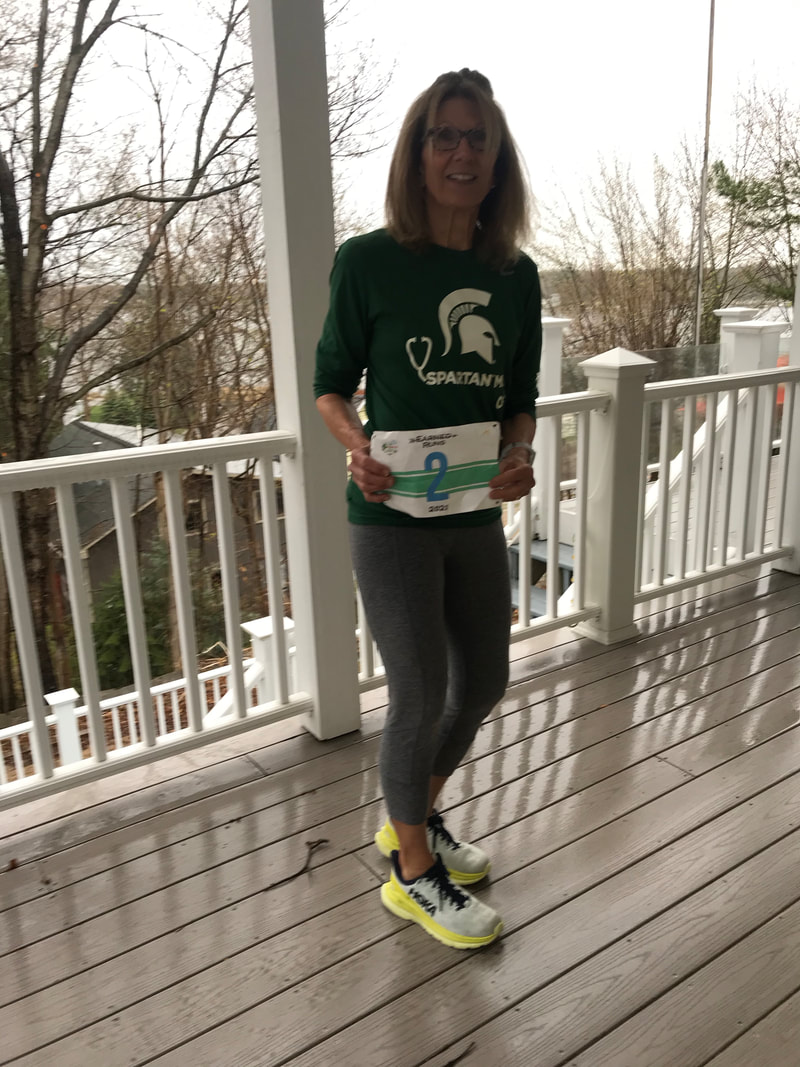
Finished my first 50K challenge, a virtual but real effort April 6, 2021. Qualifies me as an ultra-marathoner! All rights reserved.
AuthorEARNED RUNS is edited and authored by me, runner and founder. In 1978 I began participating in 10K road races before 5Ks were common. I've been a dietitian, practiced and taught clinical pathology, and been involved with research that utilized pathology. I am fascinated with understanding the origins of disease as well as health and longevity. Archives
November 2023
CategoriesNew! Search Box
Earned Runs is now searchable! Check it out...
|
 RSS Feed